Simple tips for moving with pets
Wondering how to move with pets? Moving with pets can be stressful for animals and owners alike, so planning ahead is key to a safe, low-stress move. This guide on moving with pets includes tips for preparing dogs and cats before the move, keeping them secure and calm on moving day, and helping them adjust to your new home. Whether you're moving with a dog, moving with a cat, or transporting other animals, these proven tips will help reduce anxiety before, during, and after the move.
Key Takeaways
- Plan ahead: update any relevant pet IDs, microchip info, and vet records before you move.
- Reduce stress by acclimating pets to carriers, keeping routines, and using a quiet, secure room on moving day.
- Keep pets safe in transit (crated or leashed) and pack a pet travel bag with meds, paperwork, and comfort items.
- Help pets adjust by introducing the new home slowly, keeping familiar items nearby and monitoring behavior for signs of stress.
The cardinal rule of moving with pets
Be aware of your pet's needs and overall health. Watch for signs of stress, such as loss of appetite, excessive hiding or sleepiness, digestive upset, inappropriate elimination, or aggression. Contact your veterinarian immediately if you notice any concerning symptoms.
Check list before moving with your pet
- Update ID tags and microchip information: Make sure tags list current phone numbers and the new address when possible. If your pet isn't microchipped, talk to your vet about getting one.
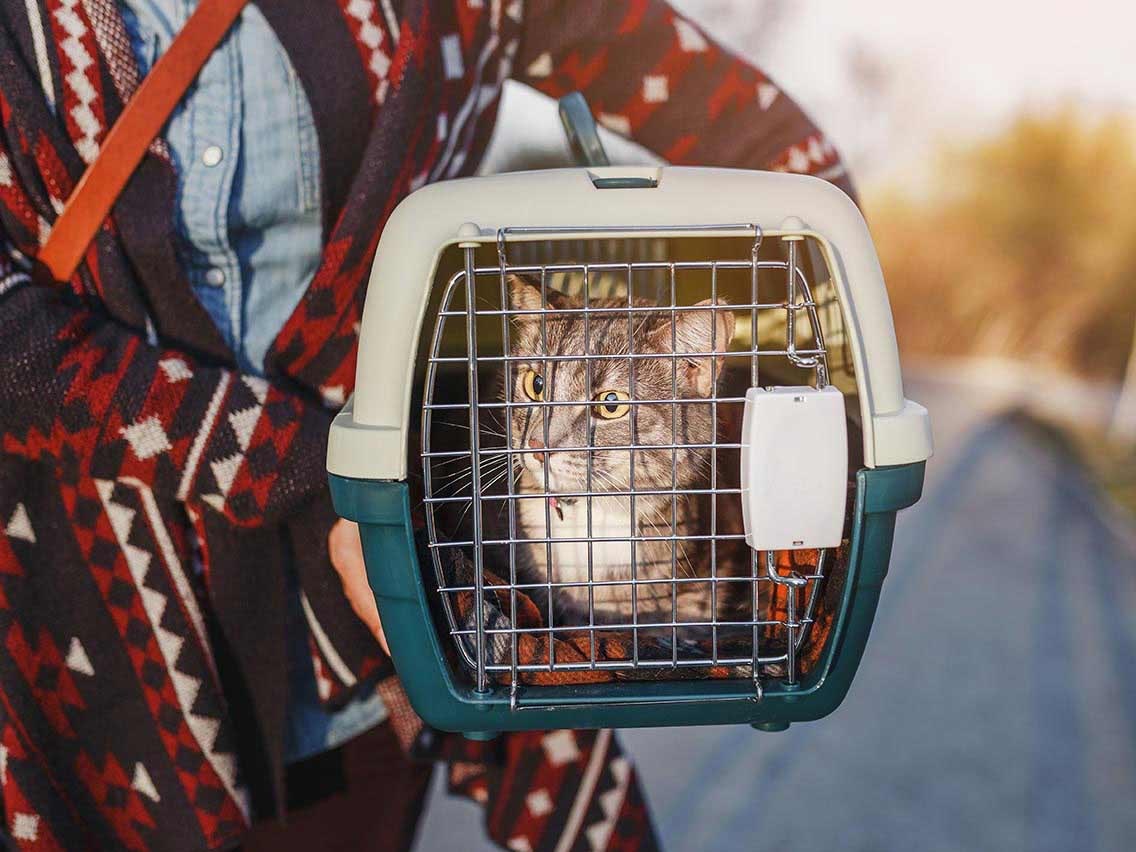
- Acclimate pets to carriers or crates: Leave carriers out with bedding, toys, and treats so pets view them as safe places. Practice short sessions so carriers feel familiar before travel day.
- Take short car trips: If your pet is not used to car travel, take brief, positive rides in the carrier to reduce motion anxiety and associate travel with treats and calm praise.
- Visit the new location, if possible: A short visit to the new house or apartment before moving day can make the environment less strange on arrival.
- Talk to your veterinarian: Refill prescriptions, get necessary vaccinations or health certificates (especially for interstate travel), and ask about calming options, such as gabapentin, for anxious pets.
- Prepare pet documentation: Pack rabies records, medical history, and microchip details in an accessible folder or digital backup.
- Consider pet insurance or review existing coverage: If you have pet insurance, confirm portability and coverage during the move; otherwise, weigh options for emergency care while traveling.
What to do with your pets on moving day
According to the Animal Humane Society, ten million pets go missing every year in the U.S., and moving is one of the main reason why pets disappear. Here are five ways to keep your pet safe during your move:
- Arrange a safe, quiet space: If possible, have a friend, family member, or pet boarding facility watch pets during the busiest moving hours. If that's not possible, confine your pet to a secure quiet room with food, water, litter box (for cats), toys, and a "Do Not Disturb" sign for movers.
- Keep to your pet's routine: Stick to normal feeding, walking, and play schedules to help reduce anxiety. Set phone or watch reminders so you won't forget in the midst of your moving day.
- Secure pets for transport: For safety, keep dogs on a leash and cats in a well-secured carrier for transport. Never leave pets unattended in a parked vehicle.
- Use a pet travel bag: You want your pet's essentials to be easy to find. Pack up their medications, recent medical records, vaccination certificates, leashes, waste bags, food, a small dish, favorite toys or bedding, and cleaning supplies in one easy-to-reach bag.
- Communicate with your movers: Let people know where your pets are located during the move and ask them to avoid opening the door to that room to prevent escapes.
How to adjust your pets to your new home
Helping pets settle into a new home takes patience. These simple steps will help ensure your new home becomes safe and familiar to your pets.
- Start small for cats: Initially confine cats to one quiet room (such as a bathroom) with familiar items. After a day or two, gradually open additional rooms so they can explore at their own pace.
- Give dogs a calm tour: Let dogs sniff and explore one area at a time while on a leash. Give treats and positive reinforcement to associate the new home with good things.
- Keep familiar items visible: Place favorite bedding, toys, and water and feeding bowls in obvious locations to provide comfort and predictability.
- Re-establish routines quickly: Consistent feeding, walks, playtime, and sleep schedules help pets adapt faster and reduce anxiety.
- Monitor behavior and health: Watch for signs of stress or illness and contact your vet if your pet shows prolonged changes in appetite, elimination, or behavior.
- Update local info: If you didn't before your move, register your address with your pet's ID company, find a nearby veterinarian, and locate emergency clinics in your new area.
- Be patient: Adjustment timelines vary. Some pets adapt in a day, and others need weeks. Offer calm reassurance and steady routines.
Get the best home insurance for you and your pets with Liberty Mutual
Moving means new risks, so protect your new home and belongings with the right homeowners insurance, condo insurance, or renters insurance.
Get a personalized Liberty Mutual quote online or call us at 844-349-8390 to review coverage options and ask about liability considerations for pet owners.

Written by Jess Feldman
Jess Feldman is an Editor of Liberty Mutual Resources, the company's consumer-focused insurance hub. She brings more than a decade of experience in content strategy, editorial management, and instructional communication, with a focus on translating complex, YMYL (Your Money or Your Life) topics into clear, accurate, and actionable resources for consumers. Prior to Liberty Mutual, she served as Content Manager at Course Report and Editor at ParksByNature Network. She holds an M.F.A. in Writing and a B.A. in English from the University of New Hampshire.

Edited by Amy Beirne
Amy Beirne creates research-driven educational content that helps consumers better understand insurance and make informed decisions. She brings more than 15 years of experience in digital strategy, analytics, and consumer research, with a focus on making complex information clear, accurate, and accessible. Amy has authored both consumer education resources and peer-reviewed academic research. She holds a Master of Philosophy in Health Promotion from the University of Bergen and a Bachelor of Arts in Communication and Anthropology from the University of New Hampshire.