Who pays for water damage in a condo or townhome?
Water damage in a condo or townhome can be stressful, especially when you're not sure who's responsible or what your insurance will cover. The answer depends on where the damage started, what caused it, and how your community's governing documents divide responsibilities between the association and individual owners.
Key Takeaways
- Who pays for water damage in a condo or townhome depends on where the problem started, what caused it, and whether responsibility falls on the association, the unit owner, or a third party.
- Condo owners and townhome owners have different insurance responsibilities — knowing your unit boundaries and HOA rules is essential.
- Acting quickly to stop the water, document damage, and notify your HOA and insurer helps prevent bigger problems and makes claims smoother.
Who pays for water damage in a condo or townhome?
Determining responsibility as to who pays for water damage usually comes down to three things:
- Where the water originated: inside your unit, or in a shared/common area?
- What caused the damage: a sudden pipe burst, or neglected maintenance over time?
- Your community's governing documents: specifically your Covenants, Conditions & Restrictions (CC&Rs), which serve as the rulebook for your condo or townhome community.
If the water damage starts inside your unit, you're often considered responsible. If it starts in a common area or a shared system (any part of the building that serves more than one unit and is maintained by the association) the condo or HOA association may be responsible instead.
When does the condo association's master policy pay for water damage?
In general, the association's master policy pays when the water damage affects the building itself, since the association is responsible for maintaining those areas. The association's master policy typically applies when:
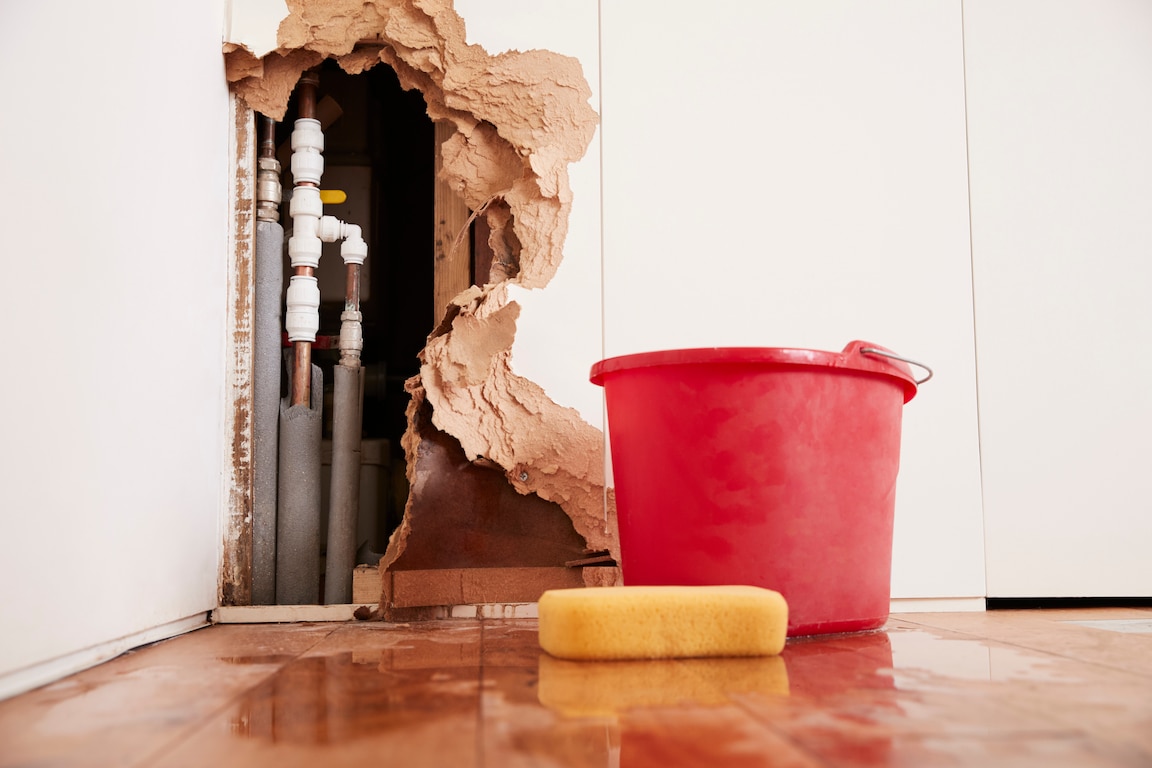
- A pipe bursts behind a shared wall
- The roof leaks due to wear or a structural failure
- A shared plumbing line fails
- Damage occurs in hallways, lobbies, or other common areas
Simply put, if the source of the water is something the association owns or maintains, the master policy is likely responsible. If the source is inside your unit and under your control, your own condo insurance policy typically applies.
When does your condo insurance pay for water damage?
Your condo insurance (also known as HO-6 policy) pays for water damage when the problem starts inside your unit or affects things that belong to you.
Your condo insurance (HO-6) typically covers water damage when:
- The water came from something you own or control, such as your dishwasher, toilet, washing machine, or a pipe inside your walls
- Your personal belongings were damaged, such as furniture, clothing, or electronics
- Unit upgrades you've added (such as flooring, cabinets, or countertops) were damaged
- Interior surfaces of your unit (paint, drywall, flooring) were damaged, depending on how your condo defines your unit boundaries
The simple rule: if the water problem starts inside your four walls, or damages your belongings or upgrades, your condo insurance is typically what steps in.
How is water damage handled differently in a townhome?
Water damage in a townhome is usually handled a bit differently because when it comes to insurance, townhomes are often treated as single-family homes.
In a townhome, you are typically responsible for both the inside and outside of your unit (walls, roof, siding, and everything inside your four walls). If water damage happens, your personal home insurance policy is usually the one that pays. The HOA's insurance only steps in when the damage involves something they maintain, such as shared green spaces, a clubhouse, or certain exterior landscaping.
Key differences between water damage in condos vs townhomes:
Scenario | Condo | Townhome |
|---|---|---|
| Pipe bursts inside your unit | Your HO-6 policy | Your homeowners policy |
| Roof leaks | Association's master policy | Your homeowners policy |
| Shared common area damage | Association's master policy | HOA policy (limited scope) |
| Personal belongings damaged | Your HO-6 policy | Your homeowners policy |
What should you do if you discover water damage in your condo or townhome?
If you spot water damage in your condo or townhome, acting quickly can make a big difference. Here's what to do right away to protect your home:
- Stop the flow of water, if you can. Turn off the water supply to the leaking appliance or pipe. If you can't find the source, shut off your main water valve.
- Take photos and videos. Document the damage, the source, and anything that has become wet. This is important when it comes to a claim situation.
- Alert your HOA or condo association. Let them know what happened so they can determine whether the damage involves something they maintain or something inside your unit.
- Call your insurance company. Report the water damage as soon as possible to your insurer. They can tell you what's covered and what steps you need to take next.
- Prevent further damage. Move your belongings out of the wet area, use towels to soak up water, and set up fans if you have them. Don't start on any major repairs. You just want to prevent things from becoming worse.
- Get professional help, if needed. If the water damage is significant, it's best to bring in a pro to handle the job. A specialized water-mitigation company can help dry things out properly and prevent mold.
- Keep all receipts. Money spent out of your own pocket to clean up the water or make temporary fixes may be reimbursable, so you want to hold onto invoices and receipts.
Frequently asked questions about water damage in condos and townhomes
When could another unit owner's insurance pay out on a claim?
Another owner's insurance may pay if the water damage was caused by something in their unit, such as their appliance leaking, their pipe bursting, or their negligence causing the problem.
What types of water damage are usually covered?
Insurance typically covers sudden and accidental water damage, such as a burst pipe, a leaking appliance, or a sudden plumbing failure. Insurance usually does not cover long-term leaks, such as water damage from drips or seeps that accumulated slowly over weeks or months. Basically, if it happened unexpectedly and wasn't preventable, it's likely to be considered a covered loss.
What types of water damage are usually not covered?
Insurance usually won't cover water damage from long-term leaks, poor maintenance, mold that developed over time, or flooding from outside sources (such as heavy rain or rising water). These are considered preventable or require separate flood insurance.
How can you help prevent water damage and possible coverage disputes?
Check your appliances and plumbing regularly, fix small leaks right away, know where your water shut-off valve is, and keep good records of any maintenance. Staying on top of things can help prevent damage and make insurance claims smoother when the unexpected happens.
Does condo insurance cover water damage from a neighbor's unit?
It depends. If a neighbor's negligence caused the damage, their liability coverage may help pay for your repairs. However, if they weren't negligent (such as a pipe suddenly failed) you may need to file a claim with your own HO-6 policy.
Always check with your insurer to understand how your specific policy applies.

Written by Kathryn Messer
Kathryn Messer is an insurance and financial services copywriter with more than 25 years of hands on industry experience. A fully licensed P&C and Life & Health broker, she has worked as an independent agency owner, commercial risk manager, and financial and investment adviser. She holds CIC, CPCU, CFP, and LUTC designations. Her writing is grounded in real world knowledge of insurance operations, regulatory complexity, P&C claims, insurance technology, and sales—giving clients a true subject matter expert with no learning curve.

Edited by Jess Feldman
Jess Feldman is an Editor of Liberty Mutual Resources, the company's consumer-focused insurance hub. She brings more than a decade of experience in content strategy, editorial management, and instructional communication, with a focus on translating complex, YMYL (Your Money or Your Life) topics into clear, accurate, and actionable resources for consumers. Prior to Liberty Mutual, she served as Content Manager at Course Report and Editor at ParksByNature Network. She holds an M.F.A. in Writing and a B.A. in English from the University of New Hampshire.
